In the first weeks after a solar system is installed, the owner checks the app several times a day. After the third month, almost never. Not from lost interest, but because understanding how the system is doing takes an effort nobody wants to make every day.
The problem is rarely the equipment
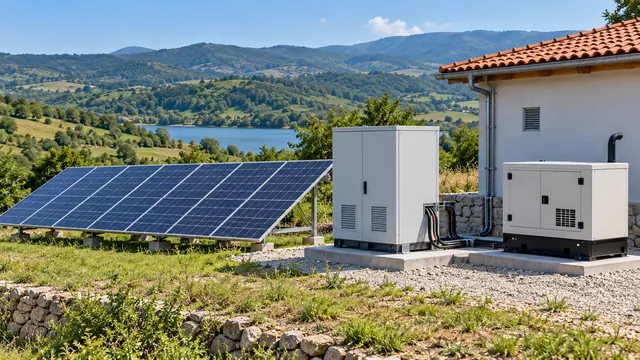
Inverters, batteries and controllers do their job well. The difficulty is elsewhere: each device comes with its own app, its own login and its own idea of what matters. The inverter shows power, the battery a percentage, the pump a state, the thermometer degrees. To get the whole picture you must tour four screens and assemble it in your head.
So the question is not how much information we can show, but how little is enough.
What we actually want to know
Honestly, there are three questions: how much am I producing now, how much am I using, and is anything wrong. Everything else is detail you reach only when needed.
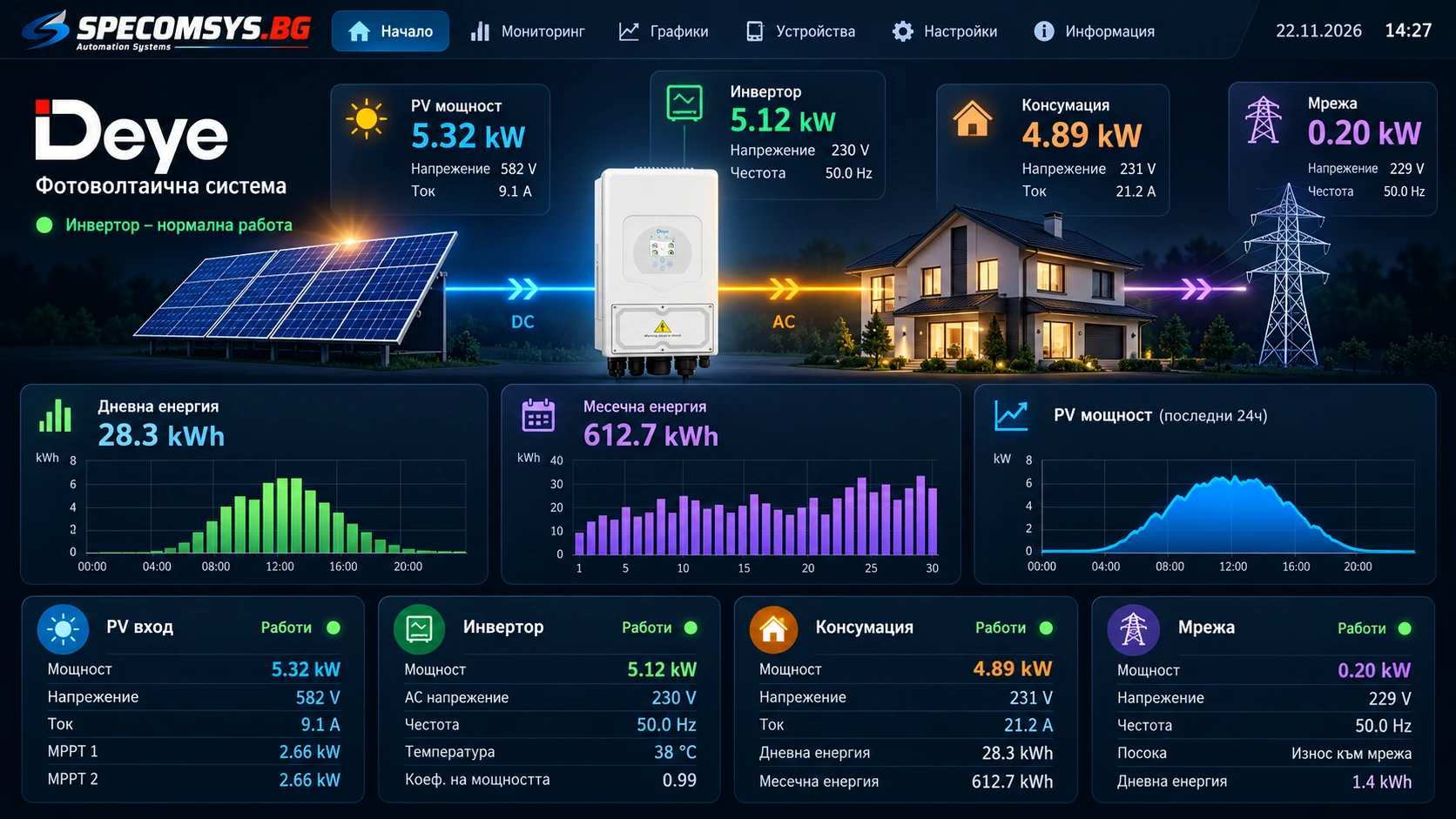
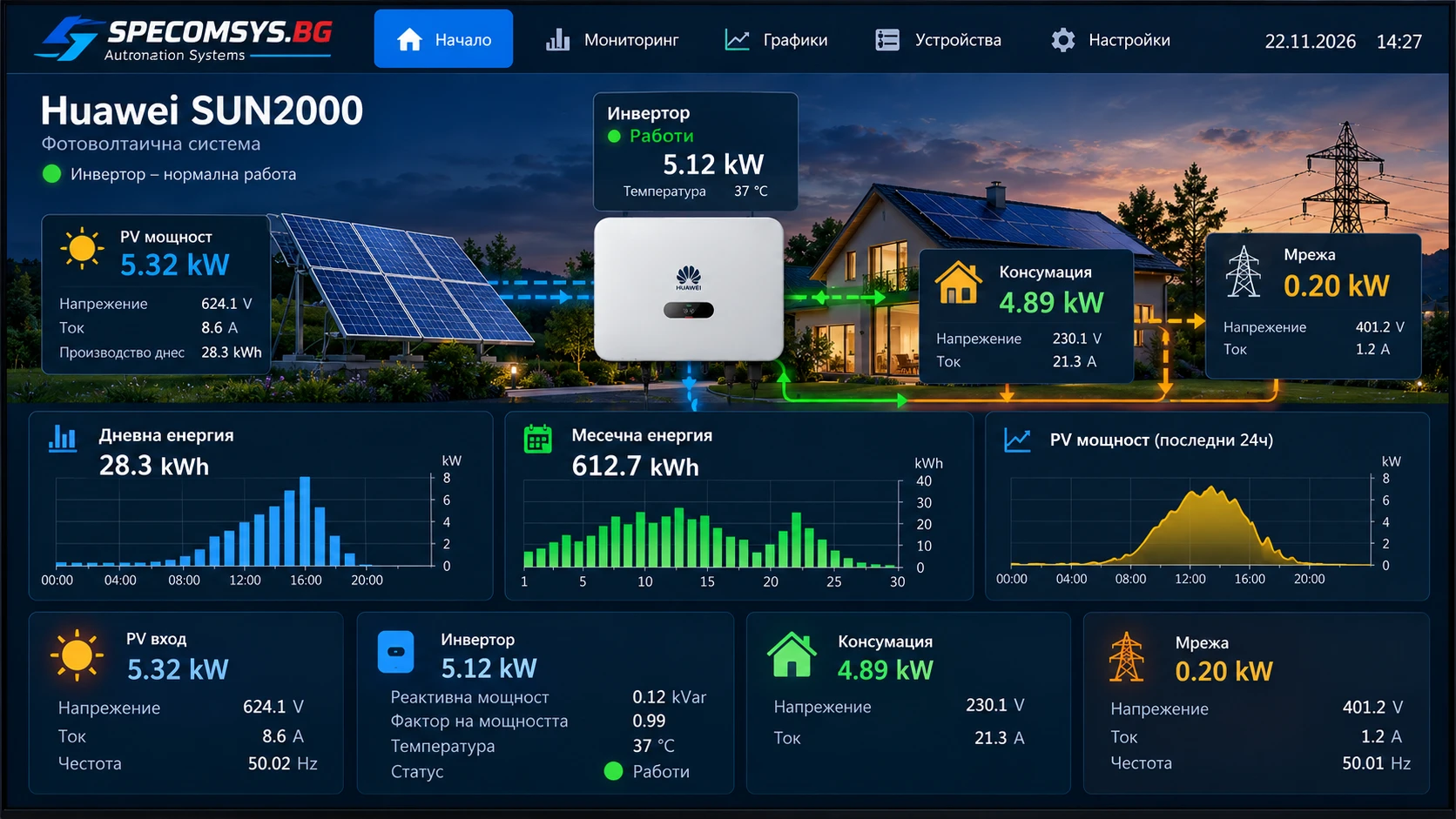
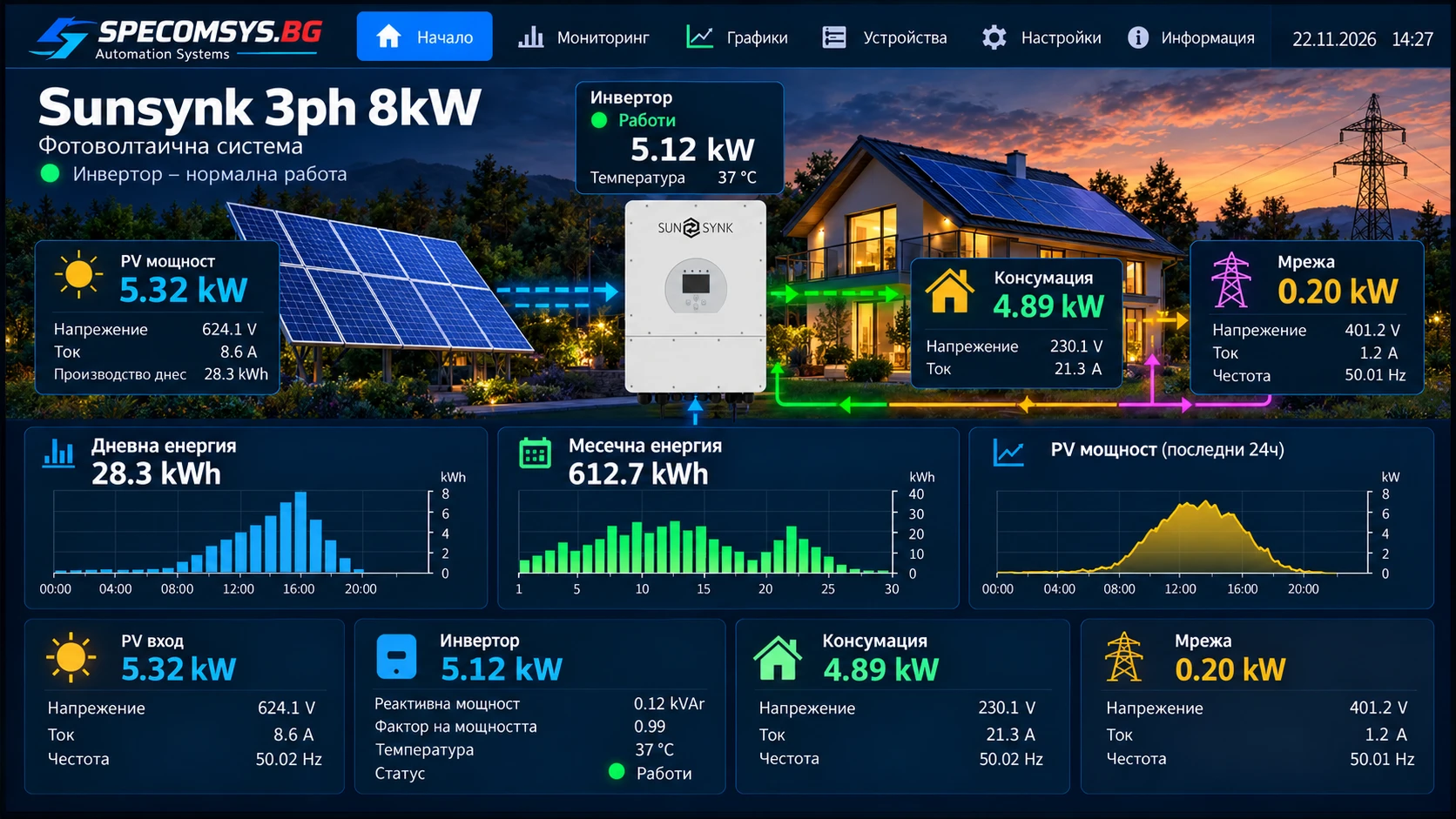
A good answer to the first two is a picture, not a table: sun, inverter, house, grid and coloured arrows showing where the energy flows. Large numbers can be read from the sofa. Below them belong the charts: daily energy by hour, monthly by day and power over the last 24 hours. They tell the story of the day without reading a single figure.
The principle is easy to see with three different inverters, from Deye, Huawei and Sunsynk. The logic is the same: the flow at the top, charts in the middle, four cards at the bottom. From one manufacturer to another only the name of the device changes; the habit stays.
The inverter is not the whole house
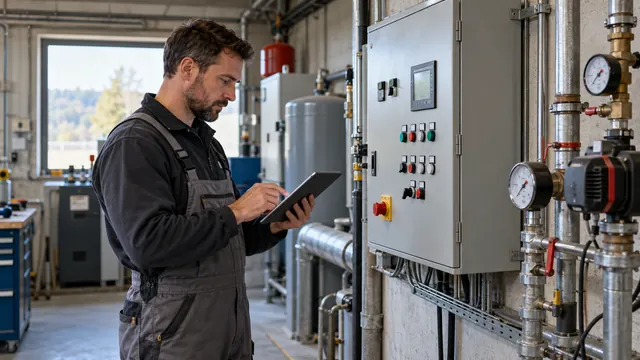
The third question, is anything wrong, rarely concerns the inverter. More often it is about things around it: is the pump running, what is the boiler temperature, what is the pressure in the water system, is the door of the technical room open.
So it makes sense to add to the same picture relay outputs (for lighting, pumps, boilers and contactors, connected through suitably rated equipment), digital inputs for states and analogue inputs for measuring temperature, pressure, level and voltage. No new screen and no new vocabulary.
Where the screen lives
Placement turns out to be almost as important as content. Information you have to look up in a phone is rarely looked at. Information in front of your eyes is looked at effortlessly. That is why a TV in the living room, driven by its remote, and a small tablet on the wall in the hallway or kitchen do more than the best app buried in a third folder on a phone. A car dashboard is not opened; it is simply there.
The cloud: convenience with compromises
Most solar apps go through the manufacturer's server. That is convenient until one of three things happens: the internet drops, the server has a problem or the manufacturer changes the terms. Besides, data on when and how much a family consumes is entirely personal.
Modern Huawei, Deye and Sunsynk inverters can answer on the local network. When the screen talks to them directly, everything stays at home: no outside platform, no dependence on someone else's server, and the readings do not disappear together with the connection. The internet stays a convenience, not a condition.
And if I am far away?
This is the most common objection, and a fair one. The answer is not to open the system to the internet but to enter your own network by a safe route. A WireGuard VPN does exactly that: an encrypted tunnel home, with no open ports and no intermediary. From outside you see the same picture as from inside, while to the outside world the system continues not to exist. When security comes first, remote access is an addition, not a door.
Who sees what
Not every family member should be able to switch off the pump. It is sensible to have a view-only mode for children and guests and a control mode for those who carry the responsibility. The picture is for everyone, the decisions for some.
Instead of a conclusion
A good system does not demand your attention; it earns it the moment you look at it. None of the above is only on paper: colleagues from specomsys.bg are working on a similar solution for an Android TV and a wall tablet, with their own controllers for relays and inputs. It is still in development, but already works at a basic level. If you are interested, you can ask through the contact form: specomsys.bg/contact.html