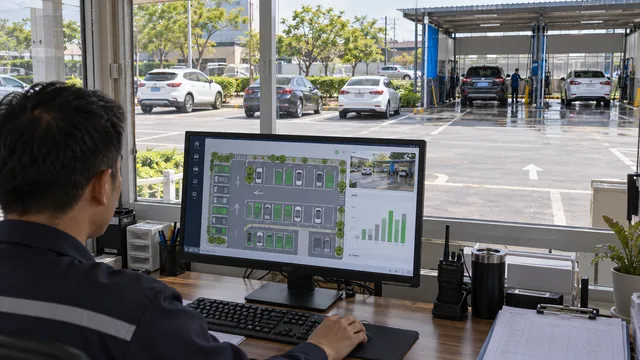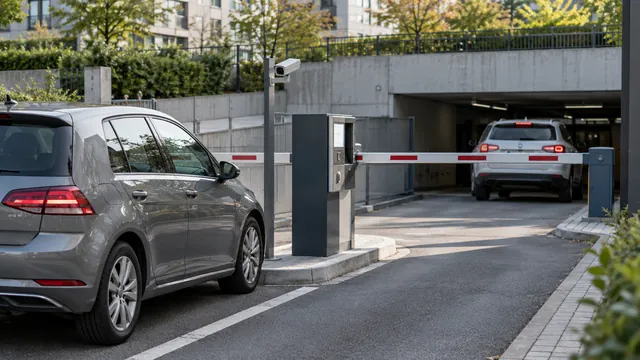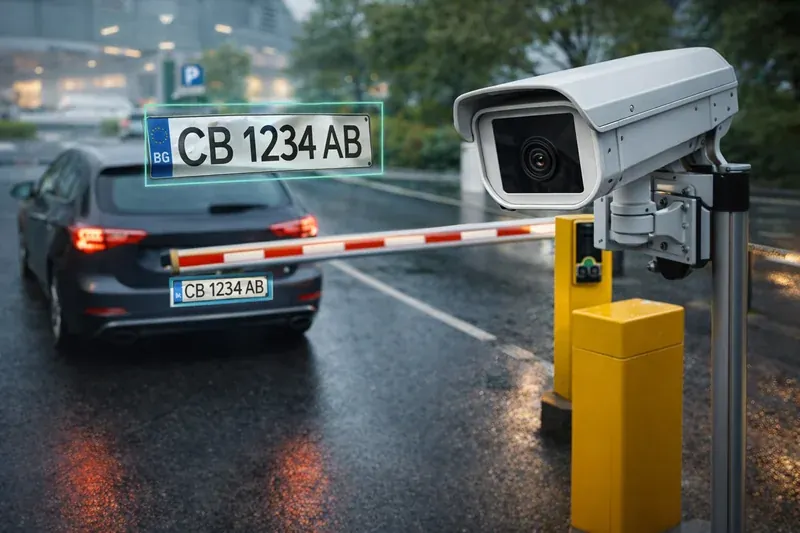
LPR (License Plate Recognition) is automatic recognition of registration plates. At a car park, a camera and software read the plate, and a controller compares the result with a list of rights. The number serves as an identifier of the vehicle; accuracy depends on the capture conditions and is not the same as authenticating the driver.
This article is about the idea of "the plate instead of a card": where it is convenient, where it causes problems and what is checked on site. How the whole visit unfolds and how spaces are counted is told in the separate article on the automated car park.
Where it makes sense
A plate is a convenient identifier where there is a permanent circle of users: company and residential car parks, logistics bases, hotels and complexes. A card can be lost or handed to someone else; a plate is not carried in a pocket, but it can be unreadable, shared or swapped.
How it works in brief
- The camera captures the plate, often with infrared illumination for the night.
- The software reads the number and checks it against the list: permanent, temporary or unknown.
- On a match the controller commands the barrier; the event is recorded with an image, direction, date and time.
- For an unknown number a backup remains — a card, a PIN or an operator.
Rights and schedules
Permanent users are entered once. Guests and suppliers get temporary access with a period that expires by itself. Groups and schedules allow different rules — for example staff at any time and suppliers on working days only. All of this is only as accurate as the lists are up to date, so it must be clear who maintains them.
What is checked on site
- Camera angle. The plate should be seen as close to the axis of travel as possible; from the side or from above the characters distort.
- Speed in front of the camera. If vehicles enter fast, frames blur; a straight stretch or a slowing element helps.
- Light. Recognition is tested by day, at night, in rain and against headlights.
- Backup entry. A dirty plate, a new vehicle or temporary plates need an alternative.
- Operation without a network. The controller keeps a local list so the entrance does not stop when the link drops.
- Barrier safety. Closing is controlled by a loop, not a timer.
Personal data
Licence plates and images of drivers can be personal data. A retention period for the log and the circle of people with access to it are defined.
In development — open to conversation
The "plate instead of card" idea is part of the parking system that Specomsys is developing at the moment. The project is in development and runs as a pilot, so the conclusions in this article are cautious. If you have experience or questions about car parks, you can write through the Specomsys contact form.