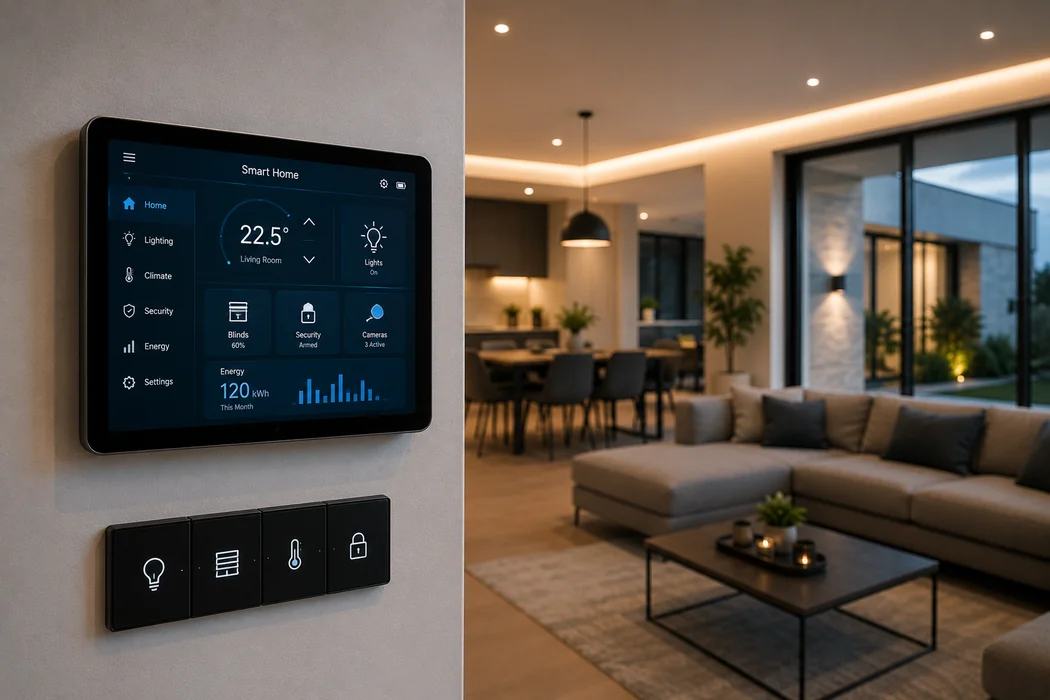
What is a smart building?
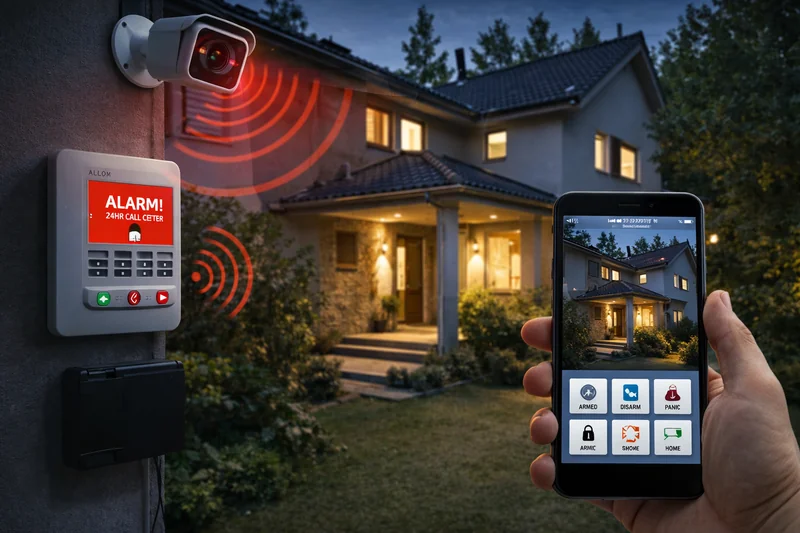
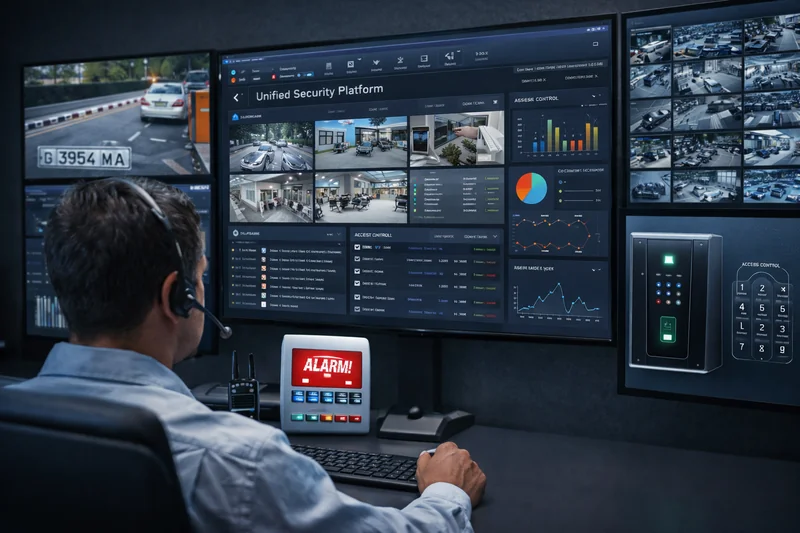
A smart building integrates separate systems — lighting, air conditioning, security, access control and energy management — into a single platform that runs automatically or can be controlled from a smartphone.
Core automation systems
Smart lighting
Lighting control systems (Philips Hue, KNX, DALI) make it possible to:
- switch lights on and off automatically based on occupancy;
- dim lighting according to the available daylight;
- use scenes (work, meeting, relaxation);
- save up to 40% of lighting energy costs.
Heating, ventilation and air conditioning (HVAC)
Smart thermostats (Nest, Honeywell, KNX) learn the occupants' habits and optimize the temperature automatically. Zoned heating allows a different temperature in each room.
Blind and curtain control
Motorized blinds that respond automatically to sunlight reduce cooling costs and protect rooms from overheating.
Automation protocols
The most widely used protocols are KNX (the building automation standard), Z-Wave, Zigbee and Matter. For commercial projects KNX is usually preferred for its reliability and broad compatibility.
Economic impact
A well-designed automation system reduces energy costs by 20–35%. For a 500 m² office, that can mean savings of more than EUR 2,500 a year.