Wired vs wireless alarm systems
For years, wired systems were the industry standard. Today, wireless technology has become so reliable that it is the preferred choice for homes, offices and small retail premises.
Advantages of wireless systems
- No wall chasing – installation does not require breaking into walls or running cables.
- Fast installation – setup takes hours rather than days.
- Flexibility – new zones and sensors are easy to add.
- Portability – when moving, the system can be removed and installed at the new location.
Main components
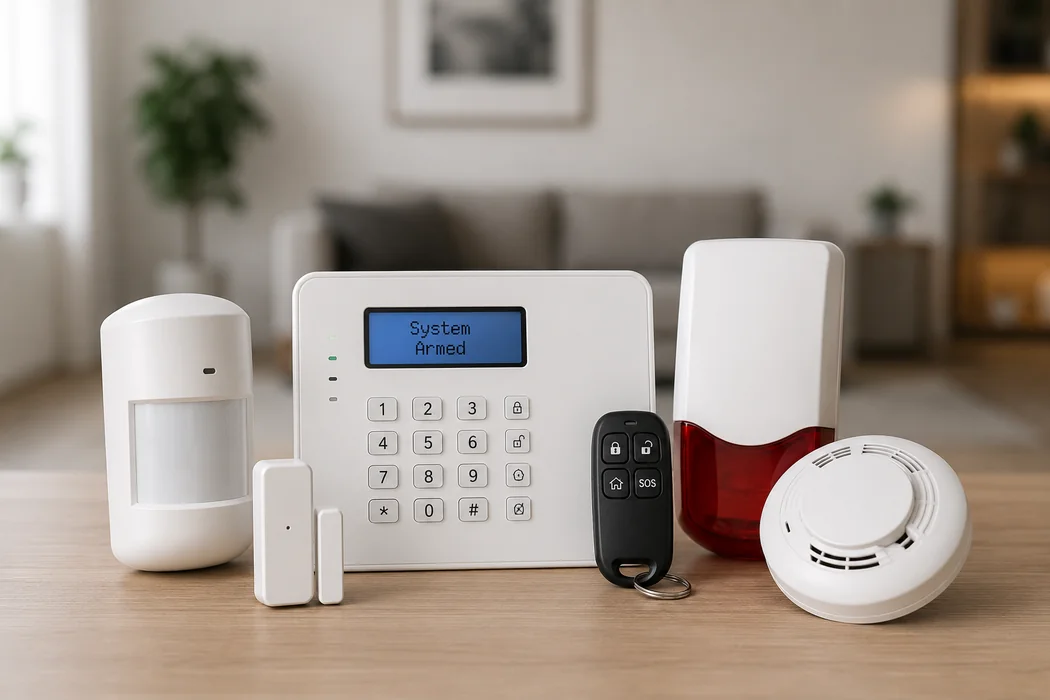
A complete system includes:
- A control panel (hub) with GSM/Wi-Fi communication
- Magnetic contacts for doors and windows
- PIR motion detectors
- A siren (indoor and/or outdoor)
- A keypad or a key fob remote
- Smoke, gas and flood detectors (optional)
Real-time notifications
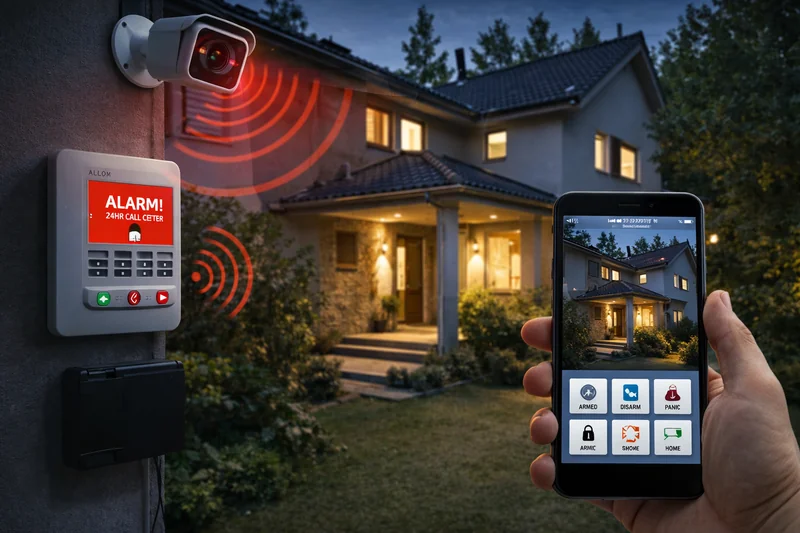
The systems discussed here are for self-monitoring: when an alarm is triggered, the notification goes straight to the owner as a call, an SMS and an app message, and with camera-equipped panels also as an image from the premises. There is no monitoring center and no response team is dispatched; the owner decides what to do. Video verification is what makes the difference: it is immediately clear whether this is a real intrusion attempt or a pet has set off the sensor.
Popular brands and systems
Systems from Ajax, Paradox, DSC and Hikvision AX are available on the market. The choice between them depends on the size of the premises, the types of detectors needed, the communication method (GSM, Wi-Fi, Ethernet) and whether video verification of alarms is required.