Why is network infrastructure critical?
In a modern business almost every device is connected to the network — computers, printers, IP phones, CCTV cameras, access control systems. A slow or unstable network has a direct impact on productivity and revenue.
Structured cabling
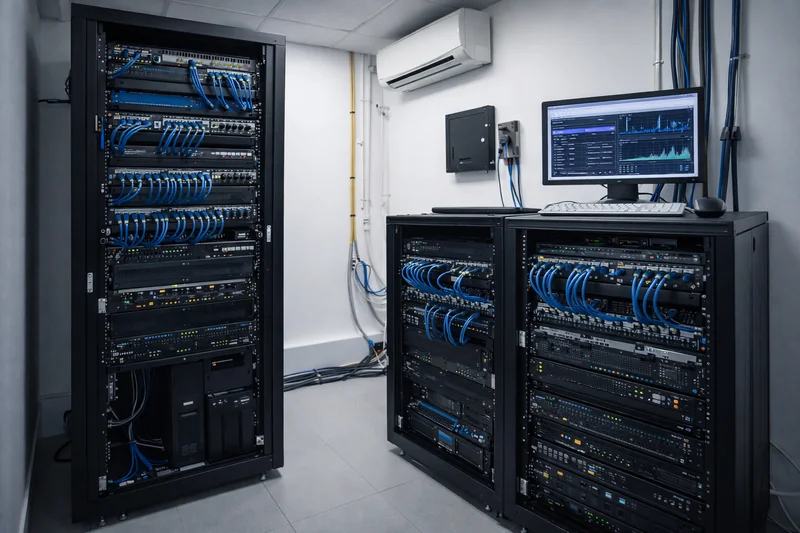
The foundation of any reliable network is high-quality structured cabling. The recommended components are:
- Cat6A cable — supports 10 Gigabit Ethernet and offers better interference protection than Cat6.
- Patch panels — for orderly management inside the network cabinet.
- 19-inch rack cabinet — for secure, well-ventilated mounting of the active equipment.
Active equipment
Switches
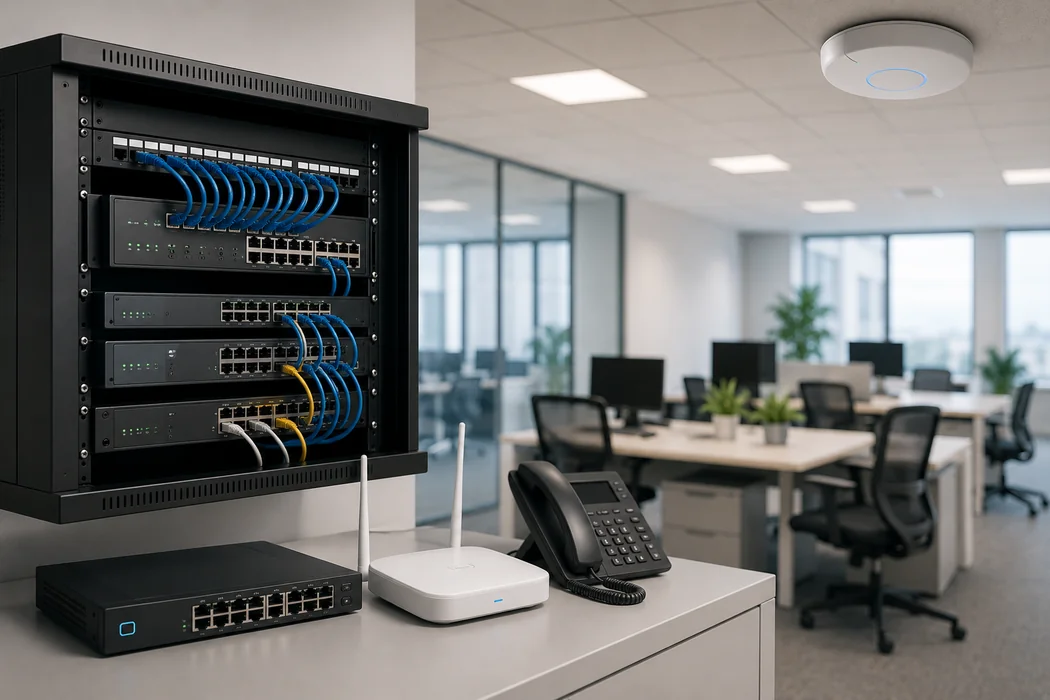
Managed switches enable VLAN segmentation, QoS traffic prioritisation and monitoring. For business use, Cisco, MikroTik or Ubiquiti are common choices.
Routers and firewalls
Securing the network perimeter requires a capable firewall. Solutions from Fortinet, pfSense or MikroTik offer a good balance between cost and functionality.
Wi-Fi infrastructure
For offices larger than 100 m², a centrally managed (controller-based) Wi-Fi system with multiple access points is recommended. Ubiquiti UniFi and Cisco Meraki are among the leading solutions.
Redundancy and UPS protection
Critical network equipment should be protected by a UPS. During a power outage the system keeps running for 30–60 minutes, which is enough for an orderly shutdown.